


Feeling sick
Feeling nauseous in early pregnancy is very common. Some only feel sick right at the start of their pregnancy, while for others it lasts a few months. Some women even experience nausea and vomiting throughout their entire pregnancy. In those cases, it’s reassuring to know that there’s help available and tips to ease the discomfort.
Nausea often occurs at the beginning of pregnancy, and a lot of women find it goes away at around week twenty of gestation. Hormones are one of the reasons why a lot of women feel nauseous during pregnancy. How much hormones affect someone varies from person to person. If you’re expecting more than one baby, your nausea may be more severe.
In many cases, the sense of smell and taste can become hightened during pregnancy. The symptoms are usually strongest in the morning, but nausea can occur at any time of the day, and for some it is constant. Nausea can also return at the end of pregnancy, at around 35 weeks of gestation. This may be caused by the baby pressing up against the stomach.
There are other factors that might affect your nausea. For example, a lot of women people feel worse when they’re tired, stressed or haven’t eaten for a long time. In general, both fatigue and nausea decrease after the third or fourth month. If the nausea gets really bad, contact your healthcare provider for support and help.
As many as 8 out of 10 women experience nausea during pregnancy. Some feel nauseous in the morning, while others experience nausea throughout the day.
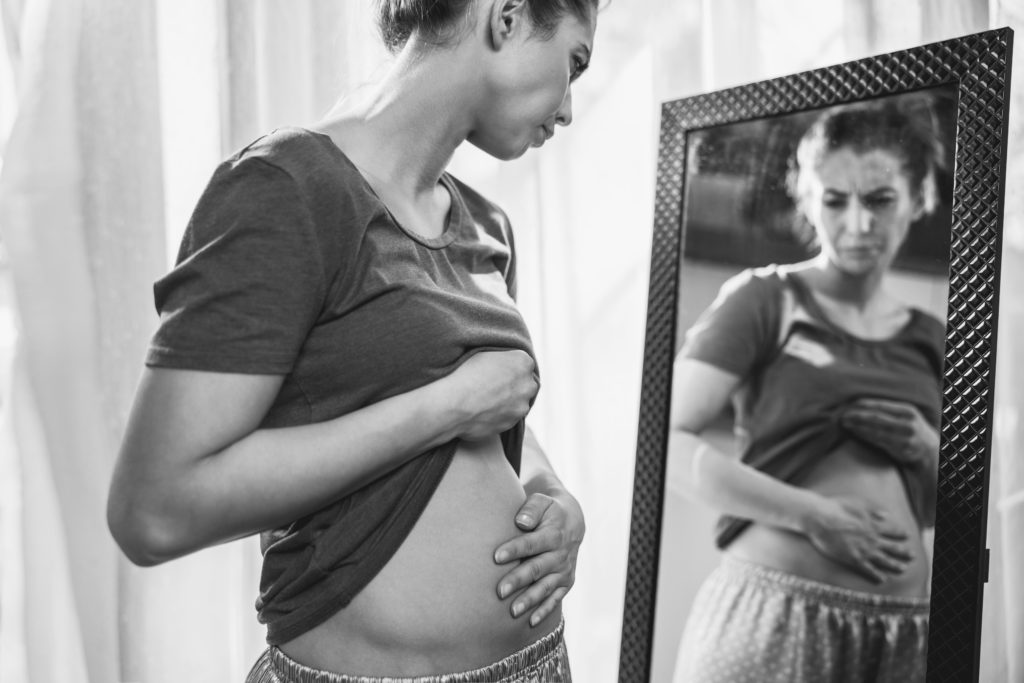
Changes to your body during pregnancy
In addition to feeling nauseous, a lot of other changes occur during the first months of gestation. You may gain weight, your body will create a larger blood volume, and you have a greater need for oxygen. Your metabolism changes, and your body temperature is affected so that you may feel warm more often. Soon, your body’s center of gravity will begin to shift, and your abdominal muscles will stretch. Being pregnant can feel like a overwhelming transition and can make you fatigued.
You may experience increased vaginal discharge during pregnancy. It’s common to have heavier, colorless discharge throughout pregnancy. This is caused by increased blood flow to the vaginal tissues..
Early in pregnancy, your breast tissue starts to grow and develop in preparation for producing milk. This can make the breasts larger, taut and tender, similar to how some people feel around their period. The nipples and areolas also grow and may become darker in color.
As the uterus begins to grow, it can press against the bladder, making you need the toilet more often. This usually continues throughout the pregnancy.
During pregnancy, your body prepares for childbirth to allow the pelvis to widen so the baby can pass through during delivery. As a result, the joints and pelvic area become softer and more flexible, which can cause pain known as pelvic girdle pain. There are ways to reduce the discomfort, such as strengthening the muscles around the pelvis. Your healthcare provider or a physiotherapist can provide guidance.
Tips for alleviating nausea
Are you pregnant and experiencing nausea? Did you know there’s help available, and tricks for alleviating the symptoms?
Pregnancy hormones can affect your mood
At the beginning of pregnancy your hormones can affect your mood. You may find yourself switching between feeling sad, upset or happy.

Real experiences
To learn more about pregnancy-related nausea, we have asked pregnant women about their experiences. See the answers in the Puke Barometer.